
Forex and gold traders are used to new buzzwords, but "agentic trading" is suddenly everywhere. If you have been following trading technology in 2026, you have likely seen major platforms rolling out new AI features. But what does this actually mean for your daily trading routine? Is it just another gimmick, or a fundamental shift in how we interact with the markets? This guide breaks down agentic trading in plain English, explaining what it is, why it is in the news, and how it impacts your risk management.
What agentic trading actually means
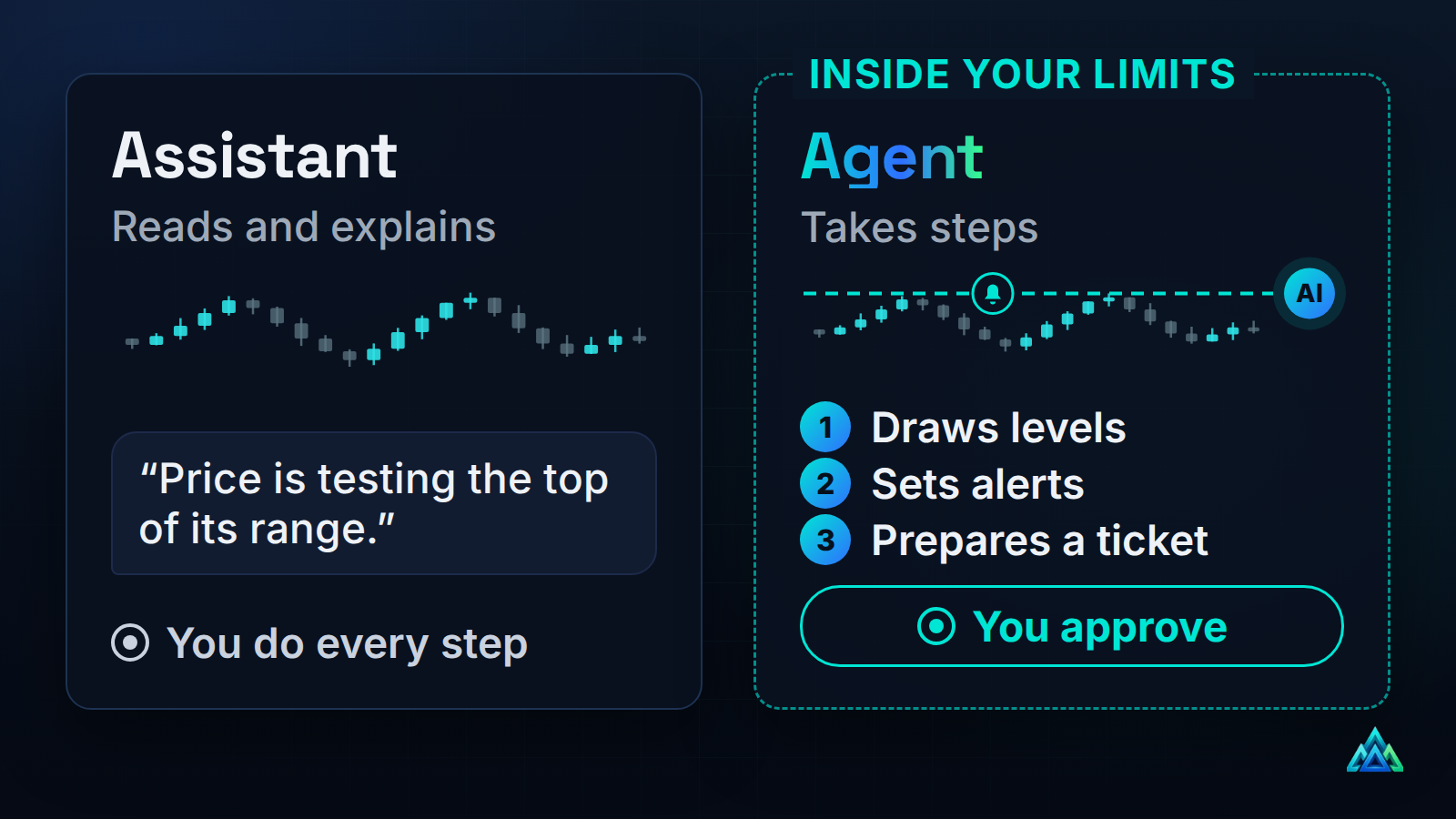
To understand agentic trading, we first need to look at the difference between an AI assistant and an AI agent.
An assistant explains things. If you ask a standard AI assistant to analyze a gold chart, it will read the historical data and give you a summary of support and resistance levels. It stops there. You have to open your trading platform, find the right chart, set the alerts, and place the trades yourself. The assistant is entirely passive.
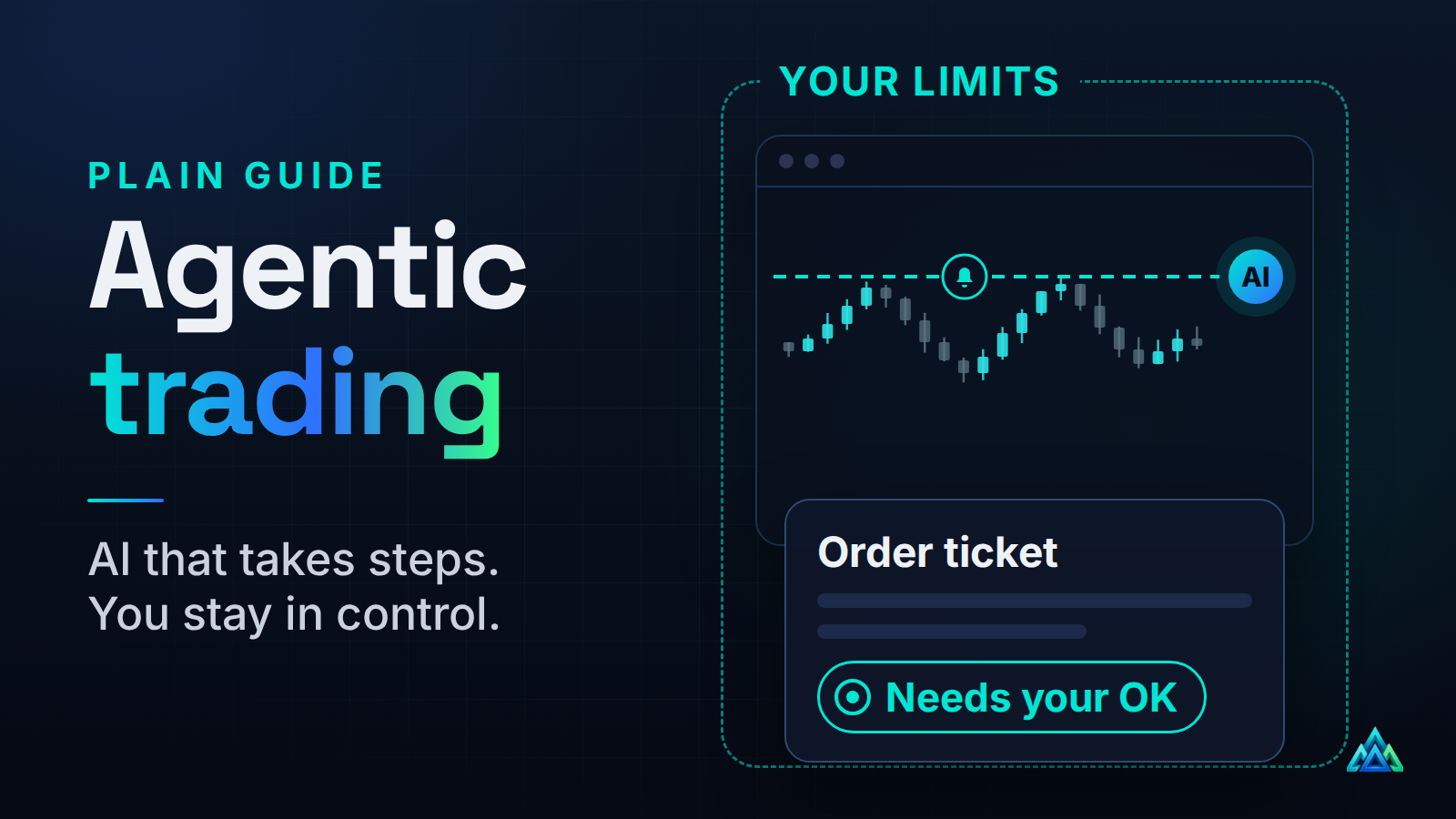
An agent acts. Agentic trading means giving an AI system controlled access to your trading platform or brokerage account so it can carry out specific steps on its own, within the strict limits you set. Instead of just telling you that gold has hit a key level, an agentic system can be authorized to automatically draw the Fibonacci levels on your chart, set up the price alerts, or even prepare an order ticket for your final approval.
In short, agentic trading bridges the gap between analysis and platform execution. The AI is no longer just a chatbot sitting in a separate browser window; it is connected directly to your trading environment. It acts as a digital helper that can navigate your platform, run complex research tasks across multiple timeframes, and handle repetitive setup work. This leaves you, the human trader, to focus entirely on making the final strategic decisions.
Why it is making headlines in 2026
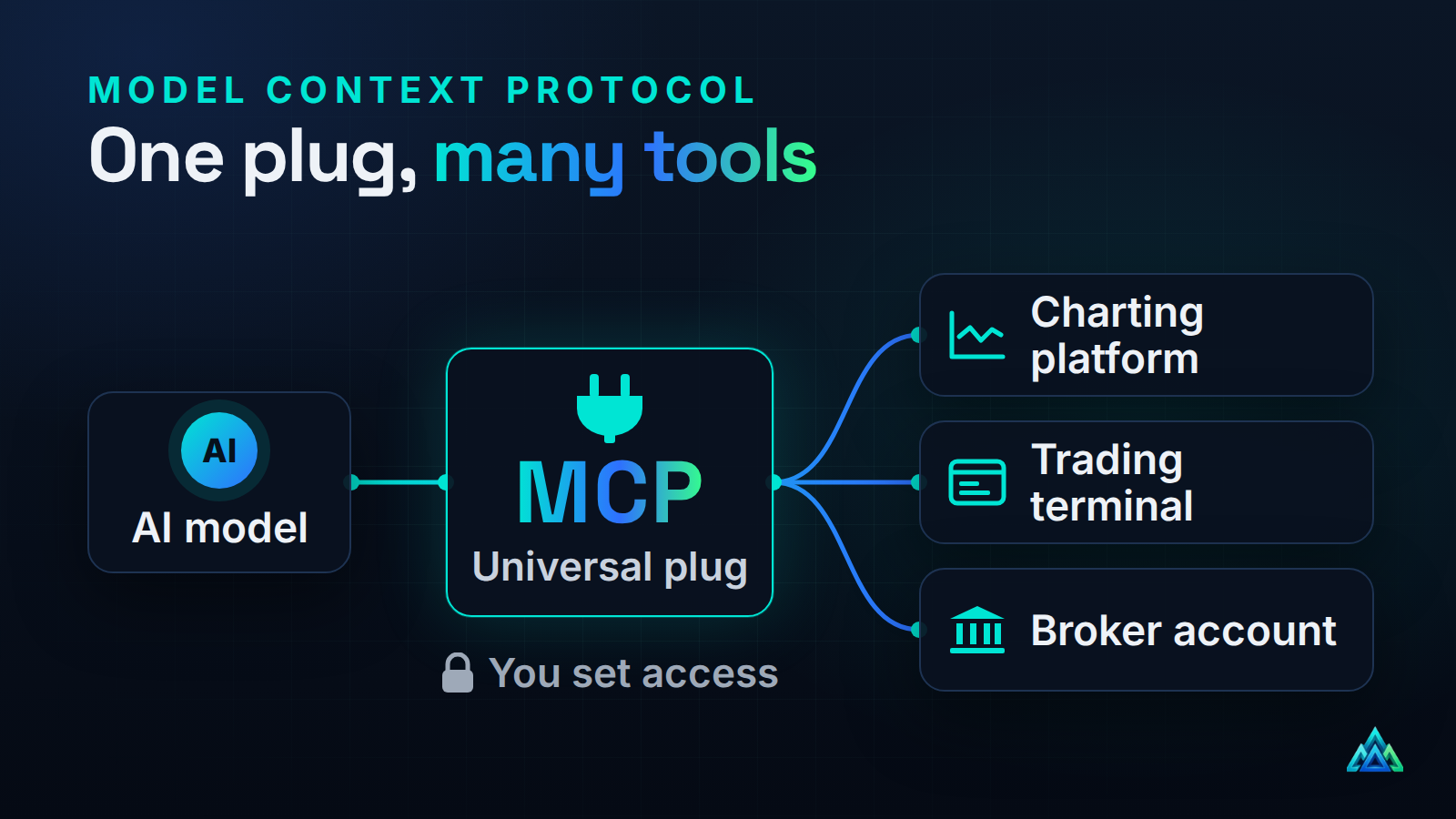
Agentic trading is dominating the news because the biggest platforms in the industry have officially opened their doors to it in 2026. They are doing this primarily through a new technology standard called the Model Context Protocol (MCP), which acts like a universal plug letting AI assistants connect to trading software.
For example, MetaQuotes, the company behind the industry-standard MetaTrader platforms, introduced native support for MCP and agentic AI in MetaTrader 5 Build 6060 in July 2026. Later builds through Build 6230 (24 September 2026) widened what the built-in AI can do on its own: read an EA's inputs and prepare a Strategy Tester run, launch or remove EAs, scripts and indicators on charts, and read the built-in Economic Calendar.
TradingView has also made major moves. In September 2026, they launched the TradingView MCP Server in public beta for paid plans. This allows traders to connect AI platforms directly to their TradingView accounts to pull quotes, run the Screener, analyze fundamentals, and manage watchlists and alerts from a single conversation. The beta has limits worth knowing: it cannot place orders, the market data it serves is delayed, the tool list is limited and daily requests are capped.
Brokerages are following suit. Dukascopy Bank introduced an MCP server for its JForex platform in June 2026. It is available on demo accounts, where the AI can place market and pending orders, and the bank said support for live accounts was planned to follow. Match-Trade Technologies followed in October 2026 with two MCP servers: a read-only one that lets brokers and prop firms query their Match-Trader data, and one for traders that can open, modify and close positions, with the trader confirming each action. These official updates mean agentic trading is no longer a future concept; it is actively built into the tools you already use.
Note what these connectors share: on MetaTrader 5, on JForex demo and on Match-Trader, the AI can send orders to your account once you allow it. That is the line that matters for the rest of this guide.
What AI agents can and cannot do
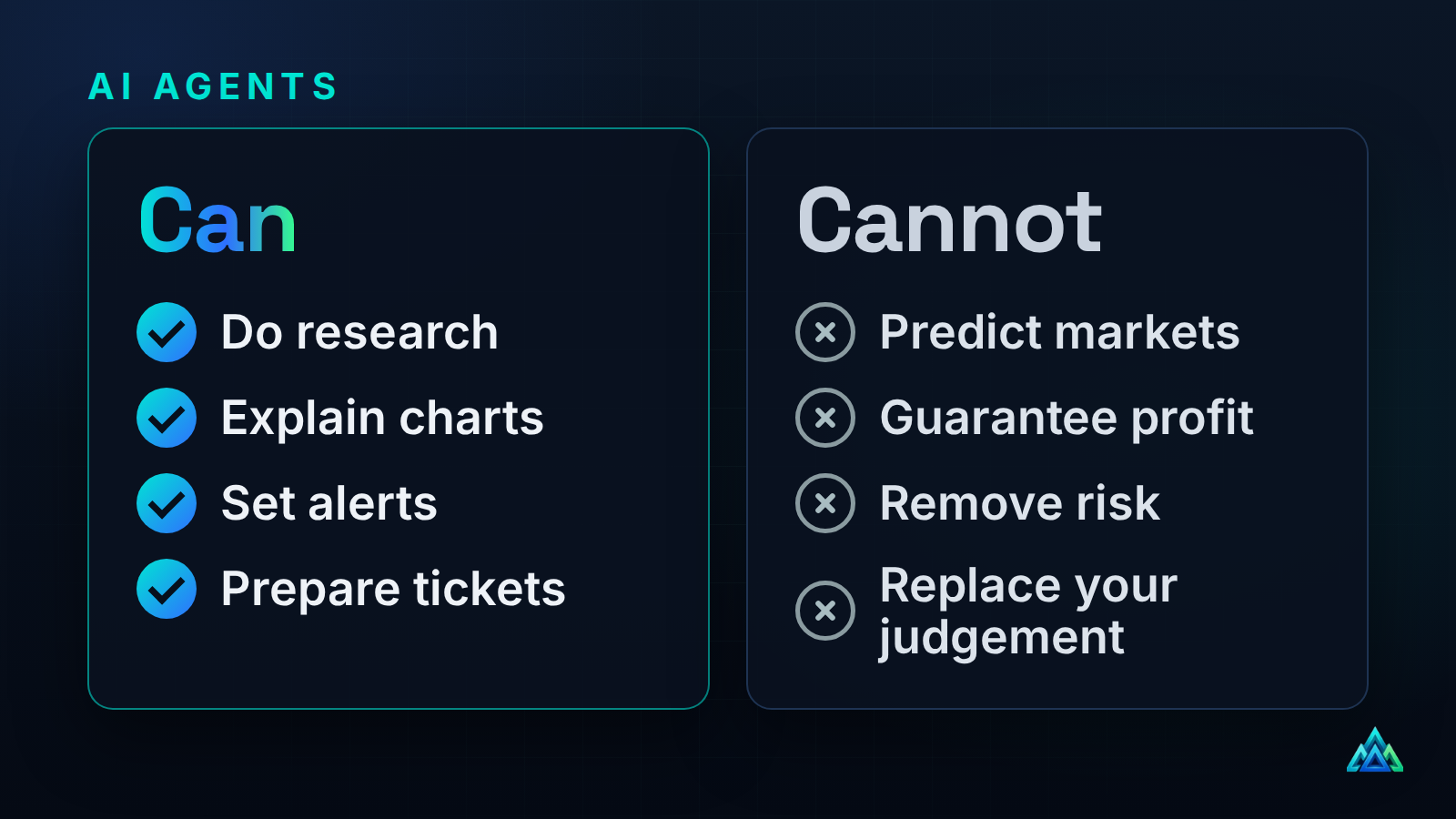
With all this new technology entering the retail trading space, it is crucial to separate reality from science fiction.
First and foremost: no AI can predict the markets. Agentic trading tools do not possess a crystal ball. They process data, follow instructions, and execute platform commands at high speed, but they cannot foresee sudden geopolitical events, unexpected central bank rate hikes, or random market volatility. They are tools for workflow efficiency, not guaranteed success.
There are also real, tangible risks involved when letting software act on your account. When you connect an AI agent to your platform, you are granting it permissions to interact with your workspace. If those permissions are too broad, a misunderstood prompt could lead to unintended actions, such as removing the wrong EA from a chart, launching a script you did not mean to run, or modifying an alert incorrectly. Mistakes in automated environments can quickly lead to real costs if they impact your active positions or cause you to miss a critical market move.
To protect yourself, you must practice strict digital hygiene. Always keep manual approvals turned on for any action that affects your capital. Treat an AI agent like a junior assistant: you might let them prepare the paperwork and do the heavy lifting of data gathering, but you must sign off on the final decision yourself. Furthermore, ensure that your API keys or platform connections strictly block withdrawal permissions. An agentic tool should only ever have access to the specific data and platform functions it needs to do its daily job, and absolutely nothing more.
How to set up agentic trading safely: a practical structure
If you decide to let an AI agent work on your trading setup, the structure around it matters more than the AI itself. Here is a layout that holds up in practice, and that you can use to judge any product, including one you build yourself.
1. Keep the AI out of the fast path. Your strategy or EA should keep trading on its own, at full speed, exactly as it does today. The agent sits in a separate, slower layer: it watches results, reads your settings and suggests changes. If the agent crashes, freezes or gets something wrong, your trading carries on unchanged. Engineers call this splitting the control plane from the data plane, and it is the single most useful safeguard.
2. Choose how much the agent may do, one step at a time. There are four levels, and each one carries more risk than the last:
- Warnings only: the agent watches and tells you when something looks wrong.
- Proposals you confirm: the agent suggests a specific settings change, and nothing happens until you press Confirm.
- Automatic changes inside your limits: the agent changes settings on its own, but only within limits you set in advance.
- Opening and closing trades: the agent acts on your positions directly. This is the level with the most risk. If a strategy already decides your trades, keep the agent on the settings the strategy trades from and leave the trades to the strategy.
Start at the first level, and only move up once the level below has proved itself on your own account. Most traders never need the fourth.
3. Put hard limits in code, not in the AI's judgement. Limits should be enforced by a small, fixed program the agent cannot talk its way around. Good limits include:
- a maximum lot size and risk per trade that no change can exceed;
- a change budget (for example, a few changes per day);
- a cool-down period between changes;
- an expiry on every change, so it rolls back automatically unless it is confirmed again;
- a saved baseline of your known-good settings you can return to with one click;
- an off switch for the agent that puts your saved baseline back at once, and leaves your strategy running.
4. Keep a log of everything. Every warning, proposal, change and decision should be written down with the time and the reason. When something goes wrong, the log is how you find out why.
5. Test before it touches real money. Replay recent market data first, but remember that a backtest on the same data you tuned on proves very little. Then run the agent on a demo account next to an identical demo account it does not touch, for several weeks, and compare the two. Only then try a small live pilot. Watch for the two classic tuning traps: fitting the settings to the last few weeks of data, and switching settings every time the market mood changes.
6. Treat everything the agent reads as data, not instructions. Broker messages, news, logs and emails can contain text written to trick an AI into doing something you did not ask for. This is called prompt injection. Limit the agent to sources you trust, and rely on the hard limits in point 3, so that even a fooled agent cannot do much harm.
7. Check the rules where you live. This is not legal advice, but be aware that the further up the levels you go, the more likely it is that rules written for advisers or algorithmic trading apply to it. In the EU, the definition of algorithmic trading covers computers that decide order details with little or no human input. In the UK, the regulator's guidance says software that generates buy or sell signals can amount to advice on investments, unless the user controls the inputs and settings enough for the signals to count as their own. In the US, the CFTC found in 2019 that two firms selling a forex "autotrader", which entered and exited trades without the customer's involvement, were exercising discretionary trading authority over customers' accounts and had to be registered, even though customers installed the software and loaded its updates themselves. The US securities regulator has also fined two investment advisers for overstating what their AI does, so be wary of any product that promises AI profits. If you are offering an agent to other people, speak to a lawyer first.
Meet Nova: AI help that keeps you in control
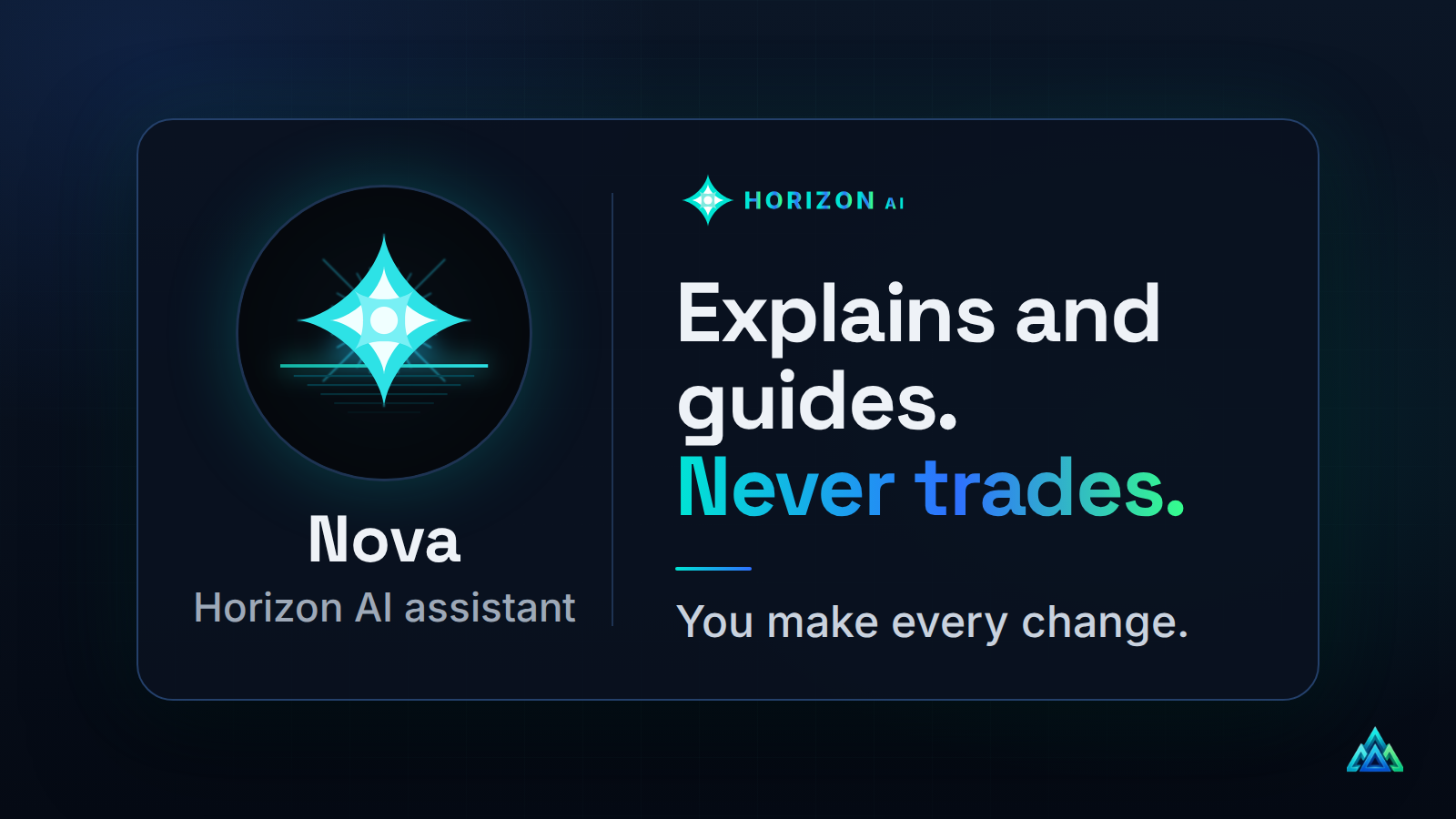
The simplest way to keep the risk down is the first level above: an assistant that knows your setup but never touches your account. That is how we built Nova, the assistant inside Horizon AI.
To be clear: Nova is not an agentic trading tool. It has no access to your account or your platform, and it never changes a setting for you. Here is why that is the right starting point for most Horizon HFT traders:
- It knows the software. A general AI chatbot has to guess how Horizon HFT works. Nova is built for Horizon HFT: it knows our software, setup and strategy settings, and it reads the screenshots and logs you send it, so its answers are about your tools, not trading in general.
- You stay in control. Nova has no access to your broker account or your platform. It cannot place, close or change a trade, and it cannot move money. Those risks come from giving software permissions on your account, and Nova has none. Nova can still get an answer wrong, which is why you make each change yourself and the Horizon team is there to check.
- It is private. Each client gets their own Nova, in a private Telegram group. Your Nova never sees another client's data.
- It works where you already are. Send a question, a screenshot or a log file in Telegram, and Nova explains what it sees and what to check next, step by step.
- A human is behind it. If Nova is not sure, it says so, checks with the Horizon team, and the team gets back to you through Nova.
Want more than a chat assistant? The Horizon AI page also lists three agent tiers as coming soon: Guided and Guided Plus run as your own agent on your own VPS; Always-on adds monitoring and alerts for your VPS, feed and Horizon. They are being built on the structure in the section above: the AI stays out of the fast path, hard limits live in code, every action is logged, and you choose how much the agent may do. We will publish exactly what each tier can and cannot touch before it goes live. You can register interest on the Horizon AI page.
Try Nova free for one week. See how it handles your own setup questions before you decide. Ask about your free week on the Horizon AI page →
Frequently Asked Questions
1. Is agentic trading the same as algorithmic trading?
No. Algorithmic trading relies on strict, pre-programmed mathematical rules (like an Expert Advisor) that execute automatically. Agentic trading involves an AI that understands natural language and can perform a variety of dynamic platform tasks based on your conversational instructions.
2. Do I need to know how to code to use AI agents?
No. The primary appeal of agentic trading tools and MCP connectors is that they allow you to interact with your trading platform using plain English.
3. Can an AI agent guarantee profits?
Absolutely not. AI agents are workflow and efficiency tools. They do not predict market direction, and they carry the same trading risks as any manual or algorithmic approach.
4. Is it safe to connect an AI to my brokerage account?
Risk is lower if you use official connectors from your platform or broker (like native MCP servers) and practice strict risk management. Always restrict permissions, require manual confirmation for trades, and never grant withdrawal access.
5. Should I let an AI agent change my settings automatically?
Not at first. Start with warnings, then with proposals you confirm yourself. Only consider automatic changes once the agent has a track record on your own account, and only inside hard limits you set: maximum lot size, a change budget, automatic rollback and an off switch.
6. Does Nova trade for me?
No. Nova is a setup and support assistant for your Horizon HFT software and settings. It has no access to your trading account, cannot place or manage trades, and gives no trading advice or signals.
7. What is the Model Context Protocol (MCP)?
MCP is an open standard that lets AI assistants connect to outside tools, such as a trading platform, and use only the actions that tool allows. What an AI can do through MCP depends on the permissions the platform and you give it.
References and further reading
- Model Context Protocol, official site (what MCP is)
- MetaTrader 5 Build 6060: AI integration and MCP (MetaQuotes)
- MetaTrader 5 Build 6230: expanded AI capabilities (MetaQuotes)
- All MetaTrader 5 release notes (MetaQuotes)
- TradingView adds MCP (Finance Magnates)
- Dukascopy launches AI trading via MCP (Dukascopy)
- Match-Trader management MCP for brokers and prop firms (Finance Magnates)
- OWASP Top 10 for LLM Applications, LLM01:2025 Prompt Injection
- MiFID II, Directive 2014/65/EU, Article 4(1)(39), definition of algorithmic trading
- FCA Handbook, PERG 8.30.3, software that generates buy, sell or hold signals
- CFTC, Silver Star FX / Silver Star Live Software, press release 8071-19 (4 Nov 2019) and order
- SEC press release 2024-36, Delphia (USA) Inc. and Global Predictions Inc., 18 Mar 2024
This article is for information only and is not financial advice. Trading involves risk, and you can lose money.